

Mar
Amazon
1P vs 3P: What Is Amazon 1P vs 3P and Which Is Better?
When brands begin selling on Amazon, one of the first strategic decisions they must make is choosing between Amazon 1P vs 3P selling models. While both approaches allow businesses to reach millions of customers, they operate very differently in terms of control, profitability, and operational responsibility.
In simple terms, Amazon 1P treats your brand as a supplier that sells products wholesale to Amazon. In contrast, Amazon 3P allows businesses to sell directly to customers through Amazon’s marketplace.
Understanding 1P vs 3P Amazon models is essential for brands looking to build a sustainable and profitable Amazon strategy. Each model comes with its own advantages, limitations, and strategic implications.
In this guide, we will explain what is Amazon 1P vs 3P, how each model works, the key differences between 3P vs 1P, and how to determine which option is better for your business.
What Is Amazon 1P?
Amazon 1P meaning a vendor relationship where brands sell their products directly to Amazon, and Amazon then sells those products to customers as the retailer. This relationship operates through Amazon Vendor Central, a platform designed specifically for brands that supply inventory directly to Amazon.
In the 1P model, Amazon becomes the retailer responsible for pricing, fulfillment, and customer experience. As a result, product listings typically display the label “Ships from and sold by Amazon,” which can increase consumer trust and perceived credibility.
How Amazon 1P Works
The Amazon 1P model usually begins when Amazon invites a brand to join Vendor Central. After onboarding, Amazon sends purchase orders based on projected demand and sales forecasts. The brand then ships the requested inventory to Amazon’s fulfillment centers, where Amazon takes control of the retail process.

From that point forward, Amazon manages product pricing, promotions, listing updates, fulfillment, shipping, and customer service. Because Amazon owns the inventory in this arrangement, vendors have fewer operational responsibilities compared to Amazon 3P sellers. However, this also means that brands have less influence over pricing strategies, marketing campaigns, and the overall presentation of their products.
What Is Amazon 3P?
Amazon 3P refers to third-party sellers who list and sell their products directly to customers through Amazon’s marketplace. Instead of selling inventory to Amazon, sellers manage their own product listings, pricing, and sales using Amazon Seller Central.
Product listings for Amazon 3P sellers usually display labels such as “Sold by [Brand Name]” and may include “Fulfilled by Amazon” if the seller uses Amazon’s fulfillment service. This model gives brands significantly more control over pricing, promotions, and listing optimization compared to the Amazon 1P model.
How Amazon 3P Works
The Amazon 3P model begins when a business creates an account on Amazon Seller Central, the platform designed for third-party marketplace sellers. Once the account is set up, sellers can create product listings, set their own pricing, and manage inventory levels.
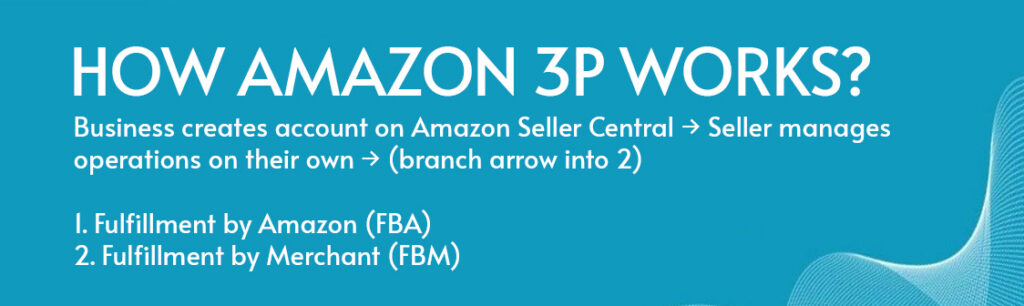
Orders can be fulfilled in two main ways. Sellers can use Fulfillment by Amazon (FBA), where Amazon stores and ships products on their behalf, or Fulfillment by Merchant (FBM), where the seller handles storage, shipping, and customer service independently. Regardless of the fulfillment method, the seller remains responsible for managing the product listings, pricing strategies, and overall sales performance.
Amazon 1P vs 3P: What are the Key Differences?
Before diving deeper into the details, here is a simple explanation of what is Amazon 1P vs 3P.
Amazon 1P (First-Party) refers to a wholesale relationship where brands sell their products directly to Amazon. Amazon purchases the inventory, becomes the retailer, and sells the products to customers through its marketplace.
Amazon 3P (Third-Party) refers to sellers who list and sell products directly to customers on Amazon’s marketplace using Seller Central, while maintaining control over pricing, inventory, and marketing.
In short, the difference between 1P vs 3P Amazon comes down to the business model: 1P is a wholesale vendor relationship with Amazon, while 3P is a direct-to-consumer marketplace model. More key differences between both the models are enlisted in the following table:
| Feature | Amazon 1P | Amazon 3P |
| Business Model | Wholesale supplier to Amazon | Marketplace seller |
| Platform | Vendor Central | Seller Central |
| Inventory Ownership | Amazon owns inventory | Seller owns inventory |
| Pricing Control | Amazon controls pricing | Seller controls pricing |
| Profit Margins | Lower margins | Higher margins |
| Advertising Access | Limited options | Full advertising control |
| Operational Responsibility | Lower | Higher |
Amazon 1P vs 3P: Which Model Should Brands Choose?
When evaluating Amazon 1P vs 3P, the right choice largely depends on a brand’s business model, operational capabilities, and long-term marketplace strategy. Both models offer unique advantages, but they serve different types of businesses. Understanding which brands should choose Amazon 1P and which should choose Amazon 3P can help companies make a more strategic decision.
Brands That Should Choose Amazon 1P
- Established brands that prefer a wholesale vendor relationship with Amazon
- Manufacturers producing high-volume products at scale
- Companies already operating through traditional retail distribution channels
- Brands looking for predictable bulk purchase orders from Amazon
- Businesses that want Amazon to handle fulfillment, logistics, and customer service
- Companies that prefer simplified operations with fewer day-to-day marketplace responsibilities
Brands That Should Choose Amazon 3P
- Growing brands and startups looking for higher profit margins
- Direct-to-consumer (DTC) brands that want full pricing and brand control
- Businesses that want to optimize listings and build a stronger brand presence
- Sellers planning to scale using Amazon advertising and promotional strategies
- Companies that want direct access to customer insights and performance data
- Brands that want greater flexibility in pricing, promotions, and inventory management
Conclusion
Choosing between Amazon 1P vs 3P is one of the most important decisions brands make when selling on Amazon.
The Amazon 1P model offers operational simplicity and wholesale relationships but limits control over pricing and margins. On the other hand, Amazon 3P provides greater flexibility, higher margins, and stronger brand ownership, though it requires more operational involvement.
Ultimately, the best approach depends on your brand’s resources, goals, and growth strategy. Many modern brands are moving toward hybrid strategies that combine the benefits of both models.
By understanding 1P vs 3P Amazon selling models, businesses can build a more sustainable and scalable Amazon presence. If you are looking for a reliable 3P partner for your business instead of jumping into the nuances yourself, Prime Retail Solution is the reliable name in the market. Book a free consultation call now.
FAQs
1. What is the difference between Amazon 1P vs 3P?
The difference between Amazon 1P vs 3P lies in how products are sold. In Amazon 1P, brands sell products wholesale to Amazon, which then sells them to customers. In Amazon 3P, sellers list and sell products directly to customers through the Amazon marketplace.
2. What is Amazon 3P?
Amazon 3P refers to third-party sellers who sell products directly to consumers on Amazon using the Seller Central platform.
3. What is Amazon 1P?
Amazon 1P is a vendor relationship where brands sell inventory to Amazon at wholesale prices, and Amazon resells those products to customers.
4. Which is better: 3P vs 1P Amazon?
The better option between 3P vs 1P Amazon depends on your business goals. Amazon 3P generally offers higher margins and more control, while Amazon 1P provides operational simplicity and bulk purchase orders.
5. Can brands use both 1P and 3P?
Yes. Many brands use a hybrid approach that combines Amazon 1P and Amazon 3P to balance control, profitability, and scale.
Share