Excess FBA Inventory: How It Impacts EBITDA and Cash Flow

When selling products on Amazon, managing inventory correctly is just as important as generating sales. Having enough stock helps keep listings active and prevents lost revenue, but holding too much…
When selling products on Amazon, managing inventory correctly is just as important as generating sales. Having enough stock helps keep listings active and prevents lost revenue, but holding too much inventory can create problems that are not always obvious right away.
Excess FBA inventory increases storage costs, ties up cash, and can reduce overall profitability over time. While these issues may not immediately impact daily operations, they can quietly affect EBITDA and make it harder to scale your Amazon business sustainably.
The good news is that excess inventory can be identified early and managed with the right approach. Let’s take a closer look at what excess FBA inventory is, why it matters, and how sellers can reduce its financial impact.
What Is Excess FBA Inventory?
Excess FBA inventory refers to products stored in Amazon fulfillment centers that are selling slower than expected. This usually happens when inventory is ordered based on forecasts that don’t match actual demand.
Common causes include:
- Ordering inventory based on short-term sales spikes
- Overestimating future demand
- Changes in seasonality or market conditions
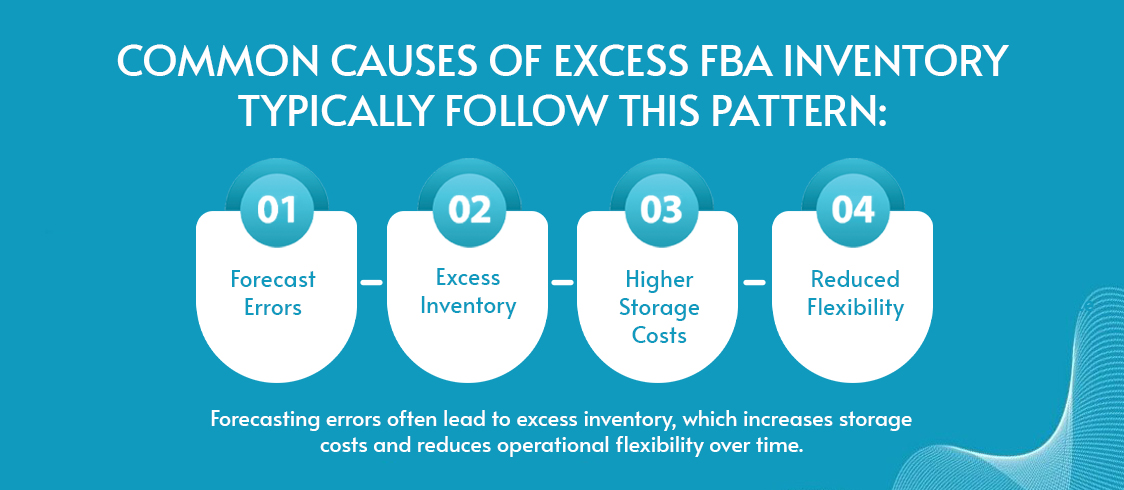
When inventory sits in FBA longer than planned, it becomes more expensive to maintain and less flexible to manage.
Why Excess Inventory Creates Financial Pressure
At first, excess inventory may not feel like a serious issue. Listings remain active, and sales may continue at a steady pace. However, holding excess inventory creates several financial challenges.
1. Increased FBA Storage Fees
Amazon charges monthly storage fees for inventory held in its fulfillment centers. These fees increase significantly for inventory that remains unsold for extended periods, especially once long-term storage thresholds are reached.
2. Cash Flow Constraints
Inventory that doesn’t sell quickly ties up capital. This limits your ability to:
- Reorder fast-moving products
- Invest in advertising
- Launch new SKUs
Even profitable products can create cash flow problems if too much inventory is held at once.
3. Ongoing Inventory Holding Costs
In addition to storage fees, excess inventory carries indirect costs such as:
- Opportunity cost of tied-up cash
- Risk of damaged or stranded inventory
- Reduced pricing flexibility
Over time, these costs can add up and impact overall profitability.
How Excess FBA Inventory Impacts EBITDA
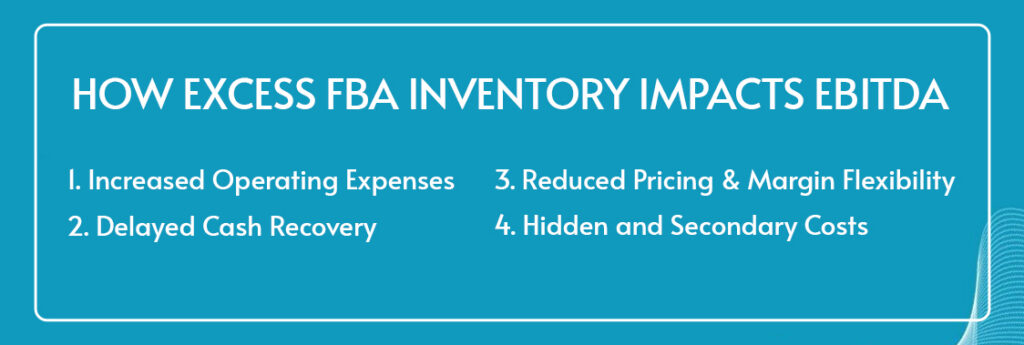
EBITDA is affected not only by revenue, but also by how efficiently operating costs are managed. When excess FBA inventory sits in Amazon fulfillment centers longer than planned, those costs increase and cash recovery slows, which can reduce EBITDA even when sales remain stable.
1. Increased Operating Expenses
Excess inventory leads to higher FBA storage fees over time. Monthly storage costs continue to accumulate, and long-term storage fees may apply once inventory reaches Amazon’s aging thresholds. These expenses directly reduce operating income and impact EBITDA.
2. Delayed Cash Recovery
Inventory that does not sell quickly ties up capital. This limits the ability to reinvest cash into advertising, restocking fast-moving SKUs, or launching new products. Even profitable items can strain cash flow if too much inventory is held at once.
3. Reduced Pricing and Margin Flexibility
As inventory ages, sellers may rely on discounts or promotions to move units. Lower pricing can help reduce inventory levels, but it often comes at the cost of reduced margins, further affecting profitability.
4. Hidden and Secondary Costs
Holding excess inventory also increases the risk of additional expenses, such as removal fees, liquidation costs, damaged units, or stranded inventory. These costs are often spread out over time, making their impact on EBITDA harder to identify.
Common Reasons Sellers Accumulate Excess Inventory
Excess inventory is usually the result of several common operational decisions rather than a single mistake.
1. Demand Forecasting Errors
Forecasting based on limited data, seasonal peaks, or early launch performance can result in ordering more inventory than the market can absorb.
2. PPC and Inventory Not Aligned
Advertising can help drive demand, but increasing ad spend to compensate for slow-moving inventory often reduces margins and distorts demand signals. This makes future forecasting more difficult.
3. Ordering Based on MOQ Instead of Sell-Through
Supplier minimum order quantities can encourage larger purchases, but if sell-through rates are not considered, inventory may sit longer than planned and become costly to maintain.
Signs You May Have Excess FBA Inventory
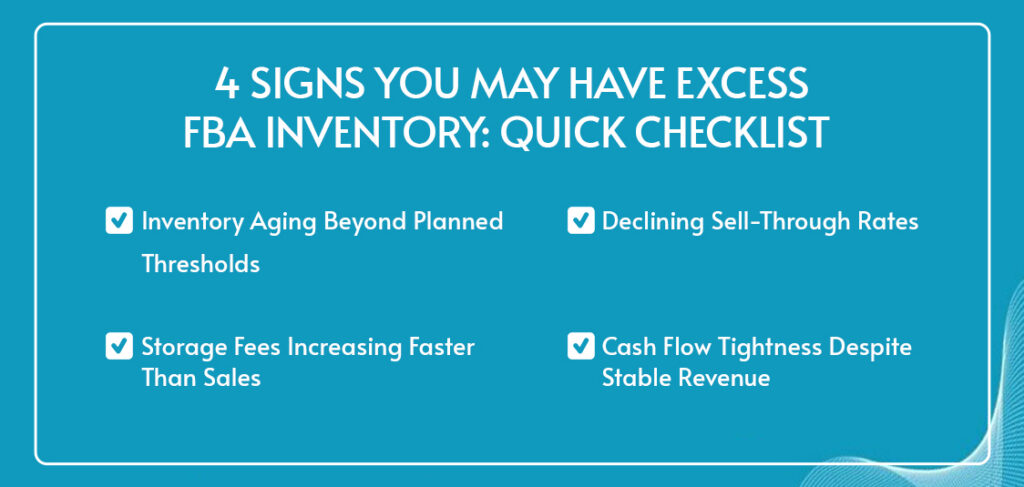
Excess FBA inventory does not always create immediate problems, which is why it can be difficult to identify early. In many cases, the warning signs appear gradually through inventory and cost metrics that sellers may already be tracking.
1. Inventory Aging Beyond Planned Thresholds
When a growing portion of your inventory is aging beyond 90 or 180 days, it often indicates that products are selling slower than expected. Aging inventory increases storage costs and reduces flexibility in managing stock levels.
2. Declining Sell-Through Rates
A declining sell-through rate suggests that inventory is moving slower relative to the amount of stock on hand. This can happen even when total sales remain stable, especially if inbound inventory continues without adjustments.
3. Storage Fees Increasing Faster Than Sales
If FBA storage fees are rising while sales growth remains flat, inventory levels may be out of balance with demand. Over time, this imbalance increases operating costs and reduces overall efficiency.
4. Cash Flow Tightness Despite Stable Revenue
When revenue remains steady but available cash becomes tighter, excess inventory is often a contributing factor. Capital tied up in slow-moving inventory limits reinvestment and reduces financial flexibility.
2 Options for Managing Excess FBA Inventory
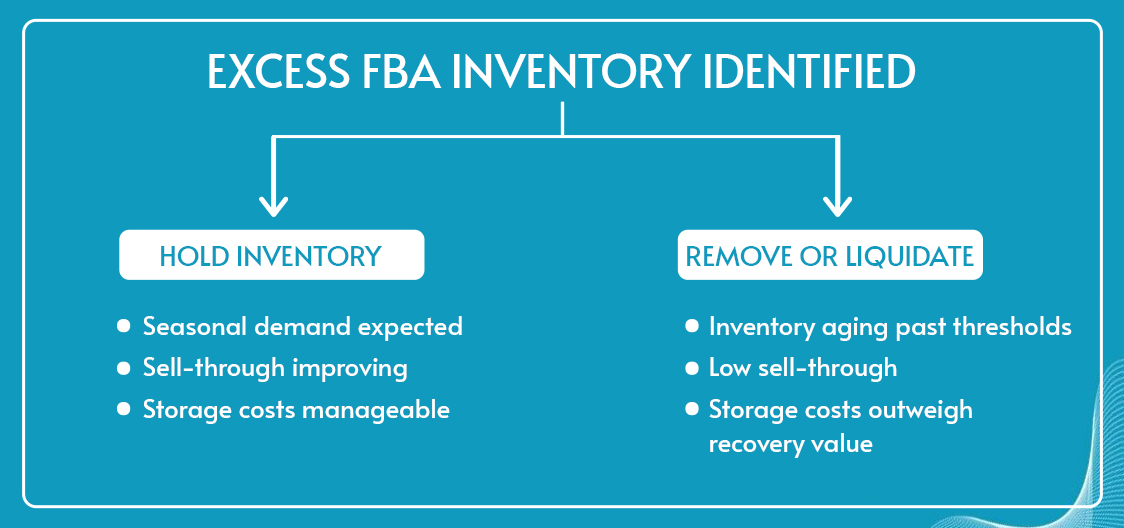
Once inventory is already sitting in FBA, sellers have several options. The right approach depends on demand outlook, storage costs, and the financial impact of holding inventory over time. Evaluating these factors helps determine whether inventory should be held, removed, or liquidated.
1. Holding Inventory
Holding inventory may make sense when there is a reasonable expectation that demand will recover. This can occur when products are affected by seasonality, temporary ranking fluctuations, or short-term changes in advertising performance.
Before deciding to hold inventory, sellers should evaluate:
- Current sell-through rate and recent sales trends
- Upcoming seasonal demand or promotional periods
- Monthly storage fees and projected holding costs
Monitoring inventory closely is important when choosing to hold stock. If sales do not improve as expected, storage costs can increase quickly and reduce overall profitability.
2. Removal or Liquidation
If inventory continues to age with no clear path to demand recovery, removal or liquidation may be a more cost-effective option. This approach can help limit ongoing storage fees and free up capital for more productive use.
Removal or liquidation may be appropriate when:
- Inventory has passed key aging thresholds
- Sell-through remains consistently low
- Storage and carrying costs outweigh potential recovery value
While removal or liquidation may result in lower immediate recovery, it can reduce long-term expenses and improve cash flow. Comparing the cost of continued storage against expected recovery value helps sellers make more informed decisions.
How Prime Retail Solution Supports Inventory Planning
Prime Retail Solution works with brands to manage inventory based on demand signals and sell-through performance rather than volume targets alone.
Inventory planning focuses on:
- Maintaining appropriate weeks of cover
- Monitoring inventory aging
- Aligning advertising and replenishment decisions
This approach helps reduce excess FBA inventory, control storage costs, and support healthier cash flow over time.
Final Thoughts
Excess FBA inventory doesn’t always create immediate problems, which is why it’s often overlooked. Over time, storage fees, holding costs, and tied-up cash can quietly affect EBITDA and limit financial flexibility.
By monitoring inventory health and planning inventory purchases carefully, sellers can reduce unnecessary costs and build a more sustainable Amazon business. If you’re reviewing your current inventory position or need support with planning and execution, Prime Retail Solution helps brands manage FBA inventory with a focus on sell-through, cost control, and long-term profitability.
Book a free consultation call now.
FAQs
1. What is excess FBA inventory?
Excess FBA inventory refers to products stored in Amazon fulfillment centers that sell slower than expected, often resulting in aging stock, higher storage fees, and tied-up cash.
2. How does excess FBA inventory impact EBITDA?
Excess FBA inventory increases operating expenses and delays cash recovery, which can reduce EBITDA even when Amazon sales revenue remains stable.
3. What are the signs of excess inventory in Amazon FBA?
Common signs include inventory aging beyond 90 or 180 days, declining sell-through rates, storage fees increasing faster than sales, and tighter cash flow despite steady revenue.
4. Can running more ads fix excess FBA inventory?
Increasing ad spend may help move inventory short term, but it often reduces margins and distorts demand signals, making excess inventory problems harder to solve long term.
5. How can Amazon sellers reduce excess FBA inventory?
Sellers can reduce excess FBA inventory by improving demand forecasting, setting clear weeks-of-cover targets, and aligning inventory purchases with actual sell-through and advertising performance.
Ready to talk
operations?
Tell us about your marketplace footprint. We'll respond within one business day.
Laguna Beach, CA 92651