
Mar
Amazon
What Is Wholesale Distribution? A Complete Guide
Wholesale distribution plays a significant role in economies throughout the world. In the United States, there are over 400,000 wholesale distributors generating $15.12 trillion in sales. This vast network forms the backbone of the supply chain. It connects manufacturers to retailers and ensures the products reach the consumer efficiently.
If you are a business professional looking to understand how exactly wholesale distribution works, you are at the right place. This guide is aimed to help inspiring entrepreneurs learn the mechanics behind wholesale distribution, its benefits, challenges and practical tips for running a successful distribution business.
How Wholesale Distribution Works
Wholesale distribution is a business model where wholesale distributors purchase large quantities of products directly from manufacturers and sell smaller quantities to various retailers. Wholesale distributors play a vital middleman role in the journey of products from the production line to their final customer.
Wholesale distributors make a profit by buying products in bulk at a discount and reselling them in smaller quantities at a higher price to individual retailers. By working at this level wholesale distributors enable retailers to offer diverse product selection to customers and allow manufacturers to focus on production. They handle the complex logistics and serve as a source of ease for retailers and manufacturers.
Wholesale distribution businesses often specialize in specific product categories or industries and develop long term relationships with manufactures.
Wholesaler vs Distributor
The terms “wholesaler” and “distributor” are sometimes used interchangeably. Both help sell products but play different roles. Wholesalers buy from distributors to further sell to retailers while distributors work directly with manufacturers. Distributors sell products in bulk to wholesalers at a lower price. Wholesalers then sell the products to retailers. Both distributors and wholesalers sell products but distributors directly interact with manufacturers and wholesalers are customers of distributors.
5 Benefits of Wholesale Distribution
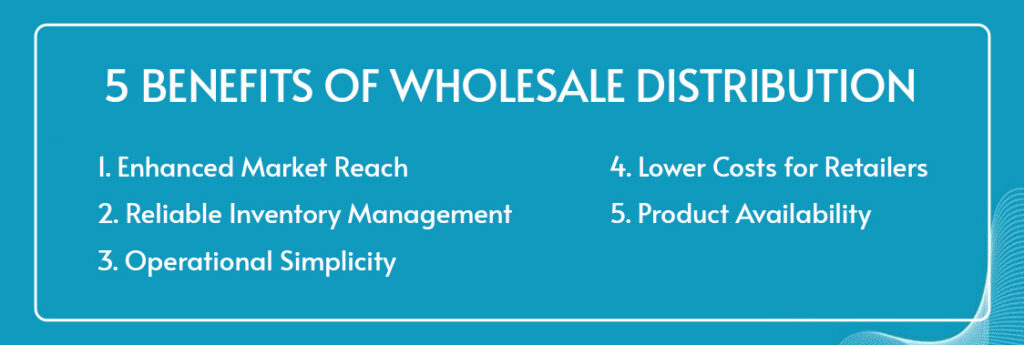
Wholesale distribution offers various advantages for manufacturers, retailers and direct consumers. The benefits include:
1. Enhanced Market Reach: Wholesalers expand manufacturers reach by connecting it with more retail outlets. This allows brands to grow their market without worrying about sales operations.
2. Reliable Inventory Management: Distributors maintain larger storage facilities so manufactures, saving retailers and manufacturers from having to store stock themselves.
3. Operational Simplicity: Wholesale distributors make operations easier for both manufactures and retailers. Manufacturers can fulfill large orders to distributors and retailers order from few suppliers rather than managing multiple vendors.
4. Lower Costs for Retailers: Retailers often get better prices from wholesalers compared to buying directly from manufacturers.
5. Product Availability: Wholesale distributors properly maintain inventory so retailers can buy anytime with peace of mind that they will always have products available.
4 Wholesale Distribution Model Challenges
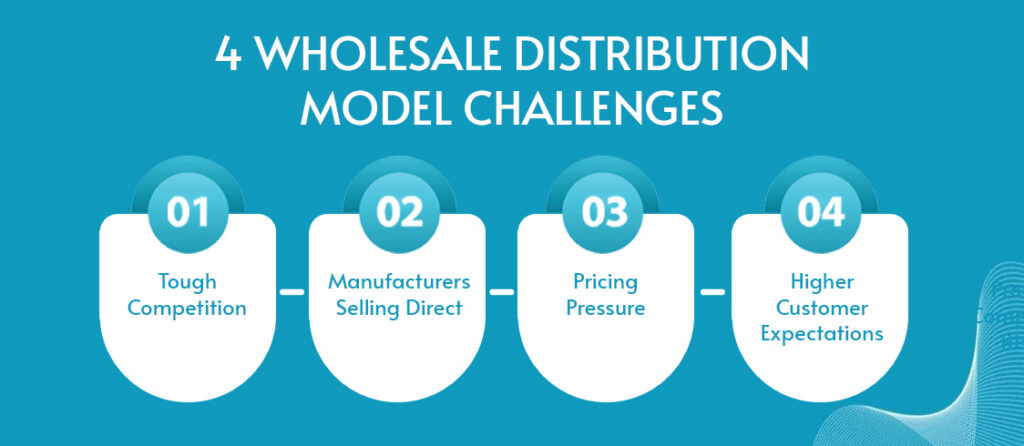
Wholesale distribution is a central component of the supply chain but it isn’t without challenges. Wholesale distribution businesses have to tackle these issues:
1. Tough Competition: As a growing industry, wholesale businesses are facing tough competition. With marketplaces moving into business-to-business (B2B) sales, B2B wholesale distribution businesses must adapt by offering best services to stay ahead.
2. Manufacturers Selling Direct: Some manufacturers are choosing to sell directly to consumers mainly to increase their profit margins and to maintain greater control over their brand.
3. Pricing Pressure: In a competitive market, wholesalers often face pressure to lower their prices in order to remain competitive. This can reduce profit margins and make it harder to cover operating costs.
4. Higher Customer Expectations: Retailers and consumers are demanding faster delivery with lower prices. Wholesalers need to meet these demands while maintaining profitability, which can be challenging.
Wholesale Distribution Industries
Wholesale distributors often specialize in a specific industry. This allows them to handle market specific challenges. The largest sectors in wholesale distribution are:
Food and Beverage
Food and Beverage has strict regulatory requirements for storage and distribution. Distributors must ensure compliance with established standards while managing seasonal and unexpected demand shifts.
Health Care
Distributors in this sector deliver drugs, medical equipment, and surgical supplies to hospitals and clinics. They must navigate complex regulations and customer needs.
Technology
Distributors of this sector manage electronics and high-tech products, handling inventory from multiple suppliers. It is crucial to stay updated on the fast evolving technology trends and demands.
Industrial
This category includes suppliers managing large inventories of industrial products for B2B retailers and industrial customers. Working as a distributor in this industry requires a broad range of products and logistical expertise.
6 Wholesale Distribution Business Success Tips

6 Wholesale Distribution Business Success Tips
1. Understand the Industry
2. Build Strong Supplier Relationships
3. Focus on Inventory Management
4. Maintain a Flexible Pricing Strategy
5. Embrace Multichannel Sales
6. Optimize Logistics and Delivery
Managing a wholesale distribution system requires industry expertise and efficient inventory management. Here are some practices you can adopt to run a successful wholesale business:
1. Understand the Industry: Research the market regularly to understand industry trends, customer demands, and competitors.
2. Build Strong Supplier Relationships: Establishing solid partnerships with manufacturers and suppliers is crucial. This ensures reliable product availability, better pricing, and the ability to meet demand efficiently.
3. Focus on Inventory Management: Efficient inventory management is key to success in wholesale distribution. Implementing modern inventory systems can help track stock levels, prevent overstocking or stockouts, and optimize supply chain operations, reducing costs and improving service.
4. Maintain a Flexible Pricing Strategy: Wholesale pricing needs to be competitive, but also sustainable. Offering tiered pricing, bulk discounts, and special offers can attract a wide range of customers. Be prepared to adjust pricing based on market demand and competition.
5. Embrace Multichannel Sales: Integrating ecommerce options and allowing customers to place orders through various channels, including online portals, phone, or email, can improve customer satisfaction and increase sales.
6. Optimize Logistics and Delivery: Fast and reliable delivery is essential for customer satisfaction. Partner with reliable logistics providers and focus on optimizing your delivery processes to ensure timely shipments and reduce delivery costs.
Conclusion
Wholesale distribution plays a vital role in connecting manufacturers with retailers, ensuring that products are efficiently delivered to consumers across various industries. By leveraging benefits like enhanced market reach, lower costs, and reliable inventory management, wholesale distribution helps businesses thrive. However, it also faces challenges such as tough competition, pricing pressure, and evolving customer expectations.
For businesses looking to navigate these challenges and succeed in the wholesale distribution industry, working with a partner like Prime Retail Solutions can provide valuable support. Get connected with our experts now!
FAQs
What is wholesale distribution?
Wholesale distribution involves buying products in bulk from manufacturers and selling them in smaller quantities to retailers. The wholesale distribution business acts as a middleman in the supply chain.
What is the difference between a wholesaler and a distributor?
A wholesaler buys from distributors and sells to retailers, while a distributor works directly with manufacturers to sell products in bulk to wholesalers.
What industries rely on wholesale distribution?
Key industries include food and beverage, healthcare, technology, and industrial products, each requiring specific distribution expertise.
What are the benefits of wholesale distribution?
Benefits include cost savings, reliable inventory management, simplified operations, and expanded market reach for manufacturers.
Can wholesalers sell directly to consumers?
While wholesalers traditionally sell to retailers, some may choose to sell directly to consumers through online platforms or specialized retail channels.
Share