Amazon Seller Inventory Management: Complete Framework
Inventory management is one of the most important drivers of long-term success for Amazon sellers. While sales, advertising, and listings often get the most attention, inventory is what keeps your bu…
Inventory management is one of the most important drivers of long-term success for Amazon sellers. While sales, advertising, and listings often get the most attention, inventory is what keeps your business running smoothly behind the scenes. If products are out of stock, customers turn to competitors. If you overstock, storage fees and tied-up cash can quickly eat into your margins. From stockouts and stranded inventory to forecasting mistakes and excess storage costs, even small inventory issues can create major disruptions for your business.
The good news is that effective Amazon inventory management does not have to be overly complex. With the right framework, sellers can maintain healthier stock levels, improve cash flow, reduce unnecessary costs, and keep products consistently available for customers. In this guide, we will break down the complete Amazon seller inventory management framework and show you how to build a more efficient, profitable business.
What Is Amazon Inventory Management?
Amazon inventory management is the process of tracking, organizing, and controlling your product stock to ensure you always have enough inventory available without overstocking. It covers everything from monitoring product availability and sales trends to storing inventory efficiently in Amazon fulfillment centers or your own warehouse.
At its core, Amazon inventory management is about balancing supply with demand. Sellers need to understand how quickly products are selling, when inventory needs to be replenished, and how much stock should be kept on hand to avoid disruptions.
Effective Amazon inventory management usually involves:
- Tracking inventory levels across Amazon warehouses and storage locations
- Monitoring sales velocity to understand how quickly products are selling
- Forecasting demand to plan restocks before inventory runs out
- Managing both FBA and FBM inventory based on your fulfillment model
- Keeping safety stock to avoid stockouts during unexpected demand spikes
- Reviewing inventory reports to identify slow-moving, excess, or stranded inventory
When managed correctly, inventory becomes a strategic tool that helps improve cash flow, and support long-term business growth.
Why Amazon Seller Inventory Management Is Essential for Success?
Effective inventory management is one of the biggest factors behind success on Amazon. In a marketplace where customers expect fast shipping, consistent availability, and a smooth buying experience, running out of stock can quickly damage your sales performance. When products are unavailable, customers often move directly to competing listings, which can result in lost revenue, lower rankings, and reduced customer trust.
Amazon’s algorithm also rewards sellers who maintain healthy stock levels. Frequent stockouts can hurt your organic visibility, reduce your chances of winning the Buy Box, and make it harder for your listings to recover once inventory is replenished. On the other hand, carrying too much inventory creates a different problem by increasing storage fees, tying up cash flow, and leaving you with slow-moving stock.
Effective Amazon inventory management helps sellers:
- Maintain product availability
- Protect organic rankings and Buy Box share
- Improve customer satisfaction
- Reduce storage and long-term holding costs
- Strengthen cash flow
- Forecast demand more accurately
- Support long-term business growth
Many sellers recognize the value of inventory control, which is why a large percentage use FBA to simplify storage, fulfillment, and shipping processes. However, even with Amazon handling logistics, sellers still need a strong inventory strategy to ensure the right products are in stock at the right time.
How does Amazon Inventory Management Work
When you use Amazon’s FBA (Fulfillment by Amazon) service, you gain access to Amazon’s inventory management tools and forecasting systems. These systems use data points such as sales history, shipping timelines, product demand, and cost of goods sold to predict future demand and recommend ideal stock levels for your products.
Another important factor in Amazon inventory management is your Inventory Performance Index (IPI) score. Amazon uses this score to measure how effectively you manage your inventory. Your IPI score is influenced by factors such as keeping popular products in stock, maintaining balanced inventory levels, fixing suppressed listings, and reducing excess inventory. A stronger IPI score can help lower storage costs and improve your overall storage capacity within FBA.
To find your Inventory Performance Index:
- Log in to Amazon Seller Central
- Under the Inventory drop-down menu
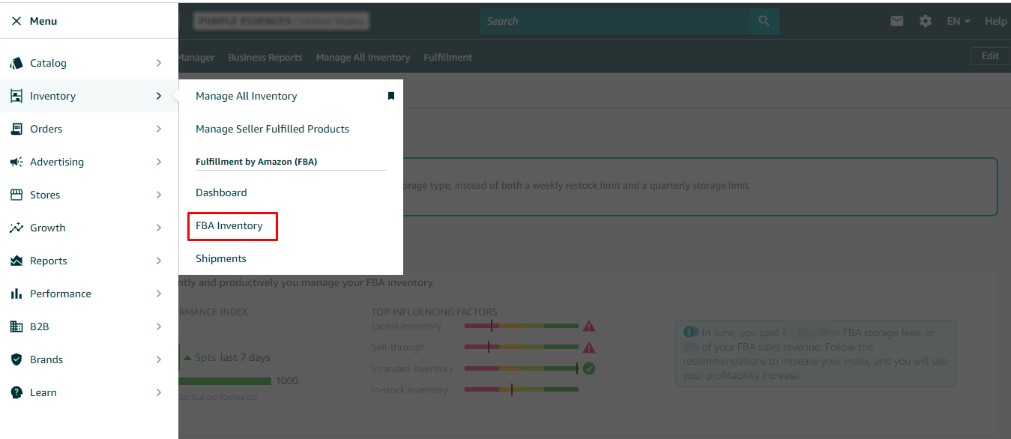
- Navigate to FBA Inventory
- Here you will find a drop-down menu under Inventory
- Click on Inventory Performance
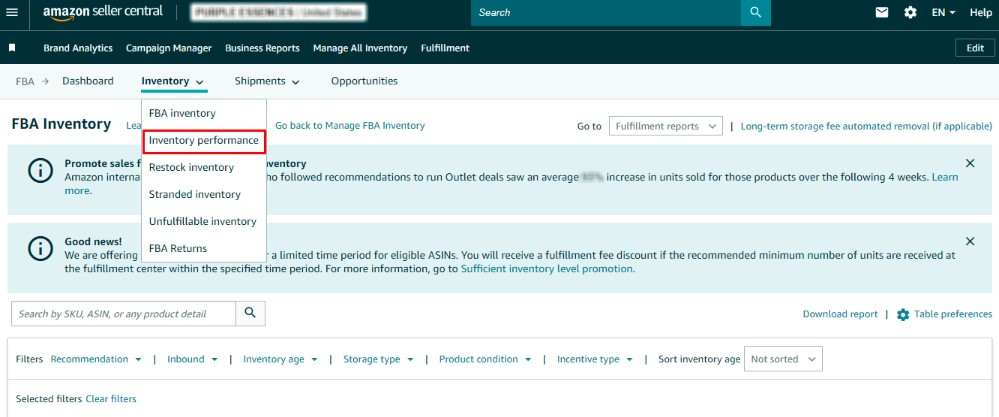
- Here you can find your Inventory Performance and ways to improve your performance
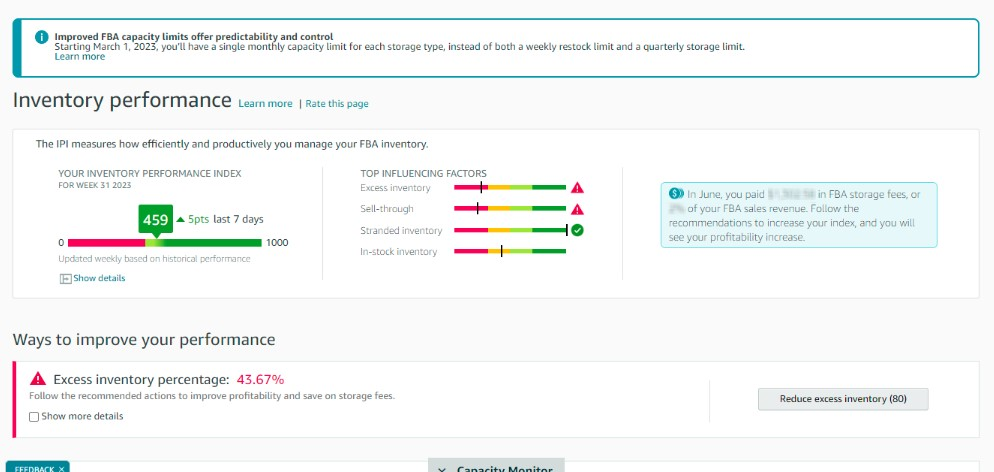
A high IPI score can reduce storage costs and, if it stays above 400, unlock additional FBA storage capacity. This gives you more room to expand product lines and maintain faster shipping.
At the same time, sellers must closely monitor supplier lead times, shipping schedules, customs delays, and sell-through rates. These factors directly affect how quickly inventory moves and help determine when to reorder stock to avoid stockouts or excess inventory.
Amazon Seller Inventory Management Best Practices
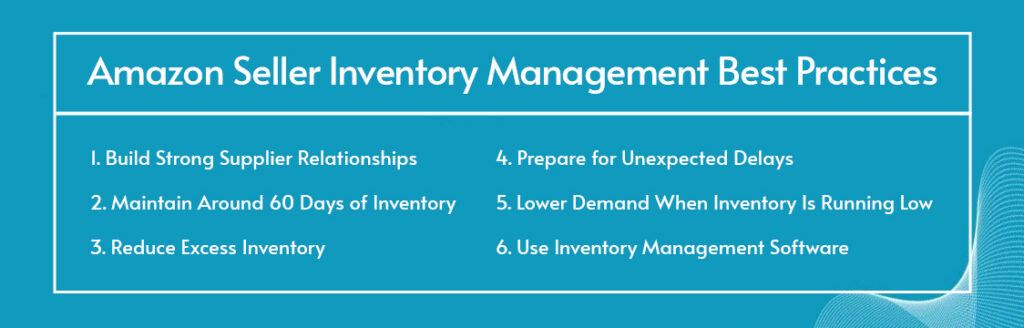
To ensure your success as an Amazon seller, mastering proper inventory management skills is essential. Here are best practices you can follow for Amazon seller central inventory management that will grant you greater control over your inventory.
1. Build Strong Supplier Relationships
Your suppliers play a major role in keeping your inventory flowing smoothly. Strong communication and a reliable partnership can help you secure faster production times, prioritize urgent orders, and reduce the risk of delays. When suppliers trust your business and understand your needs, they are more likely to support you during supply chain disruptions or sudden demand spikes.
2. Maintain Around 60 Days of Inventory
Keeping roughly 60 days of inventory on hand provides a healthy balance between avoiding stockouts and preventing excess FBA inventory stock. This buffer gives you enough coverage for normal sales fluctuations while reducing the risk of running out of inventory due to supplier or shipping delays. Use your sales velocity, historical demand, and Amazon inventory reports to determine the right replenishment schedule.
3. Reduce Excess Inventory
Holding too much inventory can increase storage fees, tie up cash flow, and hurt your IPI score. If you have slow-moving products, take action early by running discounts, coupons, limited-time offers, or bundle deals to increase sell-through rates. In some cases, slightly lowering your price can be more cost-effective than paying long-term FBA storage fees.
4. Prepare for Unexpected Delays
Inventory issues often happen when sellers rely too heavily on ideal timelines. Manufacturing delays, freight issues, customs clearance problems, and FBA receiving slowdowns can all impact your stock levels. To reduce risk, maintain backup inventory, use a third-party warehouse when necessary, and place purchase orders early enough to account for possible disruptions.
5. Lower Demand When Inventory Is Running Low
If your inventory is close to running out, it may be better to slow demand temporarily rather than go completely out of stock. You can do this by increasing prices slightly, reducing ad spend, or pausing promotions until new inventory arrives. This approach helps preserve your ranking, maintain some sales momentum, and reduce the negative impact of stockouts.
6. Use Inventory Management Software
Inventory management software can help you forecast demand more accurately and make smarter purchasing decisions. These tools analyze sales trends, seasonality, lead times, and inventory movement so you can determine how much stock to order and when to reorder it. Using software reduces guesswork and helps prevent both stock shortages and excess inventory.
Conclusion
Strong Amazon inventory management is not just about avoiding stockouts or reducing storage fees. It is about building a more stable, scalable business that can grow consistently over time. Sellers who actively monitor inventory levels, forecast demand, maintain healthy stock coverage, and respond quickly to changes in sales trends are in a much better position to protect rankings, improve cash flow, and keep customers satisfied.
By following a structured inventory management framework, you can make smarter purchasing decisions, reduce unnecessary costs, improve your IPI score, and create a more efficient fulfillment process. Whether you sell through FBA, FBM, or a mix of both, effective inventory control helps ensure your products remain available when customers are ready to buy.
If you need help improving forecasting, managing stock levels, reducing excess inventory, or building a stronger Amazon growth strategy, Prime Retail Solutions as an Amazon growth agency can help you create a more profitable and efficient inventory system for your business. Contact us for free consultation now!
Frequently Asked Questions
What is Amazon inventory management?
Amazon inventory management is the process of tracking, organizing, forecasting, and replenishing product stock so you can keep enough inventory available without overstocking. It involves monitoring sales trends, lead times, FBA storage, supplier schedules, and restock needs to maintain healthy stock levels.
Why is inventory management important for Amazon sellers?
Inventory management is important because it helps prevent stockouts, reduce storage fees, improve cash flow, protect organic rankings, and maintain Buy Box eligibility. Poor inventory management can lead to lost sales, stranded inventory, higher FBA costs, and reduced customer satisfaction.
What happens if I run out of stock on Amazon?
Running out of stock can hurt your listing rankings, reduce Buy Box share, and cause customers to purchase from competitors instead. Frequent stockouts can also make it harder for your listings to recover once inventory is replenished, especially for high-demand products.
How much inventory should Amazon sellers keep on hand?
Most Amazon sellers aim to maintain around 30 to 60 days of inventory, depending on product demand, supplier lead times, and seasonality. Keeping enough stock coverage helps reduce the risk of stockouts while avoiding excessive storage costs.
The Inventory Performance Index (IPI) is a score Amazon uses to measure how effectively sellers manage their inventory. It is based on factors such as sell-through rates, excess inventory, in-stock levels, and stranded inventory. A higher IPI score can improve your FBA storage limits and lower certain storage restrictions.
What is Amazon’s Inventory Performance Index (IPI)?
Ready to talk
operations?
Tell us about your marketplace footprint. We'll respond within one business day.
Laguna Beach, CA 92651