How an Authorized Reseller Agreement Protects Your Brand from Unauthorized Resellers on Amazon
Unauthorized sellers are one of the most common challenges brands face on the Amazon marketplace. When products are sold without approval, it becomes difficult to maintain pricing control, protect li…
Unauthorized sellers are one of the most common challenges brands face on the Amazon marketplace. When products are sold without approval, it becomes difficult to maintain pricing control, protect listing quality, and manage brand reputation. Many brands assume Amazon will automatically remove unauthorized sellers, but in most cases, Amazon allows multiple sellers on the same listing unless there is clear proof of policy violation or controlled distribution.
Without proper agreements and enforcement, unauthorized resellers negatively affect your brand. One of the most effective ways to prevent this problem is by creating a structured distribution policy to remove sellers who are not approved.
In this guide, we will explain how unauthorized sellers impact your brand, how reseller agreements work, and what practices help maintain strong brand control on Amazon marketplace.
How Unauthorized Sellers Are a Serious Problem for Brands on Amazon
An unauthorized Amazon reseller is any seller that sells your product without your permission. These sellers often buy products in bulk and sell them at a cheaper rate without complying with your brand guidelines. Unauthorized sellers make it difficult to maintain brand control on Amazon marketplace
For example, let’s say your brand sells a supplement for $30 and only approved partners are allowed to sell it online. An unauthorized seller gets the product from a secondary source and lists it on Amazon for $22 to win the Buy Box. This forces the listing price down, reduces your margins, and disrupts your pricing strategy.
In addition to price erosion, unauthorized sellers may ship damaged, expired, or improperly stored products. When customers leave negative reviews, those reviews appear on the listing itself, which harms your brand reputation even though the issue was caused by another seller.
Multiple unauthorized sellers also create Buy Box instability, making it harder for your brand to control sales, inventory, and advertising performance. Because Amazon does not remove sellers without proof of policy violation, brands need clear distribution rules and reseller agreements to prevent these problems.
How to Protect Brand on Amazon From Unauthorized Resellers
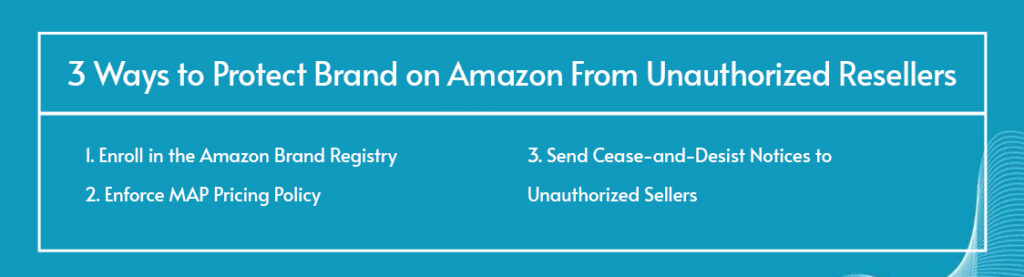
Here are some effective Amazon brand protection strategies to protect your brand against unauthorized resellers:
1. Enroll in the Amazon Brand Registry
If your brand is officially registered, take advantage of Amazon’s Brand Registry to safeguard your products on the platform. It's a free program that protects against intellectual property infringement. Brand Registry gives you access to advanced tools that help detect and report intellectual property violations.
The reporting tools enable you to take action against any unauthorized sellers. You can use features like Report a Violation, Transparency, and automated protections to identify sellers who are listing products without proper authorization. While Brand Registry alone does not automatically remove all unauthorized resellers, it gives you the documentation needed to take action.
2. Enforce MAP Pricing Policy
A Minimum Advertised Price (MAP) is the lowest price that authorized resellers are allowed to advertise your product for. It is the sellers responsibility to create and enforce MAP pricing policy.
To implement MAP, set a pricing rule in agreement with distributors or wholesales stating that partners can not advertise the product below the approved minimum price.
For example, if your brand sells a skincare serum with a MAP price of $25, any reseller listing the same product on Amazon for $18 would be violating the MAP policy. When a MAP policy is documented in your reseller or distribution agreement, you have the right to take action against sellers who break the rule.
3. Send Cease-and-Desist Notices to Unauthorized Sellers
If your brand has an established policy with resellers that prohibits selling specific items on Amazon, you may be in a position to send a cease-and-desist letter to unauthorized sellers. These letters inform the seller that they are not authorized to sell your products and requests proof of legitimate sourcing.
In many cases, unauthorized sellers cannot provide valid invoices from approved distributors. When this happens, they often remove the listing voluntarily to avoid further action. If they continue selling, the notice can be used as supporting documentation when reporting the seller through Brand Registry or pursuing legal enforcement.
How an Authorized Reseller Agreement Helps Protect Your Brand on Amazon
An Authorized Reseller Agreement is one of the most effective tools for controlling who can sell your products on Amazon and provides strong legal protection for Amazon brands against unauthorized sellers. This agreement defines the rules that distributors, wholesalers, and retailers must follow when reselling your products.
Brands that run an Amazon authorized distributor program should also keep updated records of approved suppliers and resellers to make enforcement easier when unauthorized sellers appear.
The agreement typically includes restrictions on where products can be sold, how they can be advertised, and whether Amazon marketplace sales are allowed. By clearly stating that only approved sellers may list products on Amazon, you create a legal basis to challenge unauthorized listings.
One of the biggest advantages of an Authorized Reseller Agreement is that it allows you to show Amazon that you have a controlled supply chain. When you can prove that inventory is only sold to approved partners, Amazon is more likely to act against sellers who cannot show valid sourcing, which strengthens your Amazon reseller compliance.
These agreements also help enforce MAP pricing policies, which prevents price wars that damage brand value. When resellers agree to pricing rules, you can take action against partners who don’t follow them.
In addition, reseller agreements protect your brand from gray market and diverted inventory. This helps you stop grey market sellers on Amazon by ensuring that only approved distributors can supply your products.
How to Manage Reseller Agreements for Amazon
Creating an agreement is only the first step. To protect your brand effectively, reseller agreements must be actively managed.
Start by keeping a clear list of all approved resellers and distributors. This makes it easier to identify whether a seller on Amazon is authorized or not. Make every partner sign the agreement so that the agreement rules apply to everyone.
When a violation is detected, contact the seller professionally and request proof of authorized sourcing. In many cases, unauthorized sellers will remove the listing once they realize the brand has a formal policy.
Consistent enforcement is what makes reseller agreements effective. If rules are not applied equally, unauthorized sellers will continue to appear.
Conclusion
Unauthorized sellers can disrupt pricing, damage listings, and make it difficult to maintain brand control on Amazon marketplace. Without clear distribution rules, Amazon often cannot take action, which allows unauthorized resellers to negatively affect your brand reputation and pricing.
As a 3rd party marketplace service provider, PRS helps brands maintain stronger brand control on Amazon marketplace. Contact us now to get expert guidance now!
Frequently Asked Questions
How to stop unauthorized sellers on Amazon?
To stop unauthorized sellers on Amazon, brands should use Brand Registry, enforce MAP pricing, create an Authorized Reseller Agreement, and monitor seller activity regularly to identify and report violations.
Can Amazon remove unauthorized sellers for my brand?
Amazon may remove sellers only if you provide proof of policy violation, intellectual property infringement, or restricted distribution. Without documentation, Amazon usually allows multiple sellers on the same listing.
Does Amazon enforce MAP pricing policy?
No, Amazon does not enforce MAP pricing. Brands must create and enforce their own MAP policy through distributor contracts.
Why is brand control on Amazon marketplace important?
Brand control helps maintain pricing, protect product listings, prevent gray market sales, and ensure customers receive authentic and properly handled products.
Do I need Brand Registry to protect my brand on Amazon?
Brand Registry is not required, but it gives access to tools that make it easier to report violations, protect listings, and manage unauthorized seller activity.
Ready to talk
operations?
Tell us about your marketplace footprint. We'll respond within one business day.
Laguna Beach, CA 92651